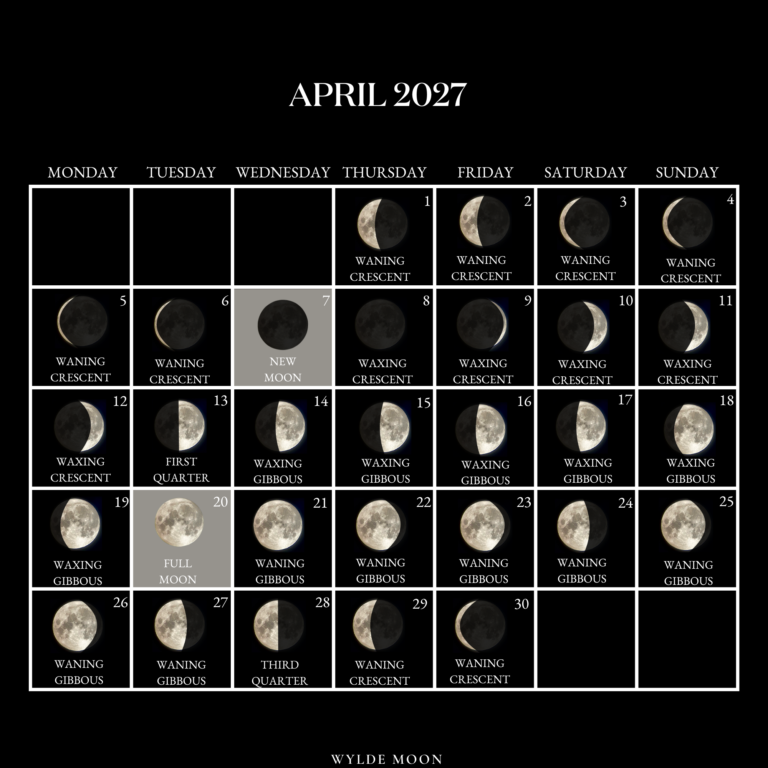
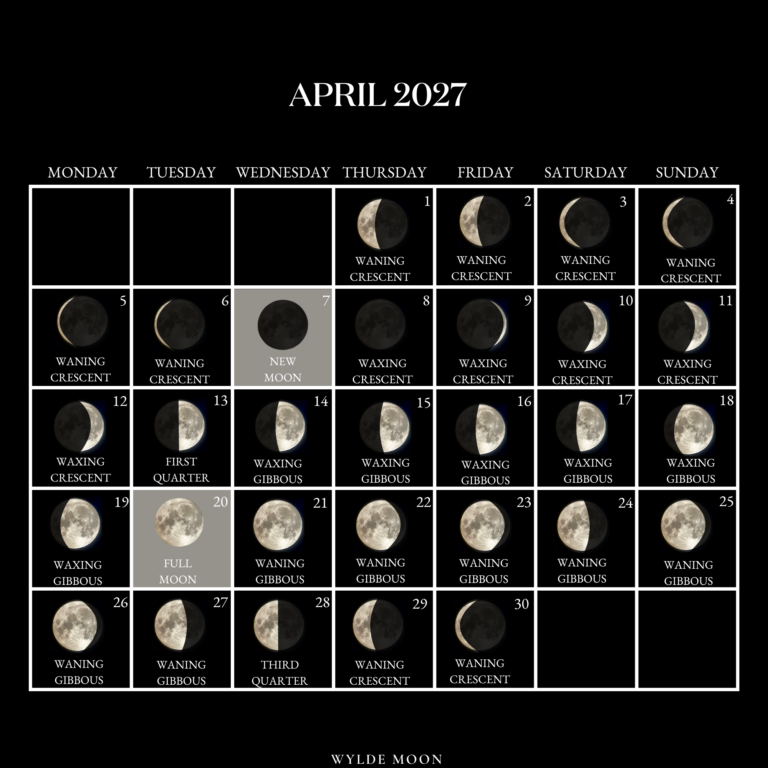
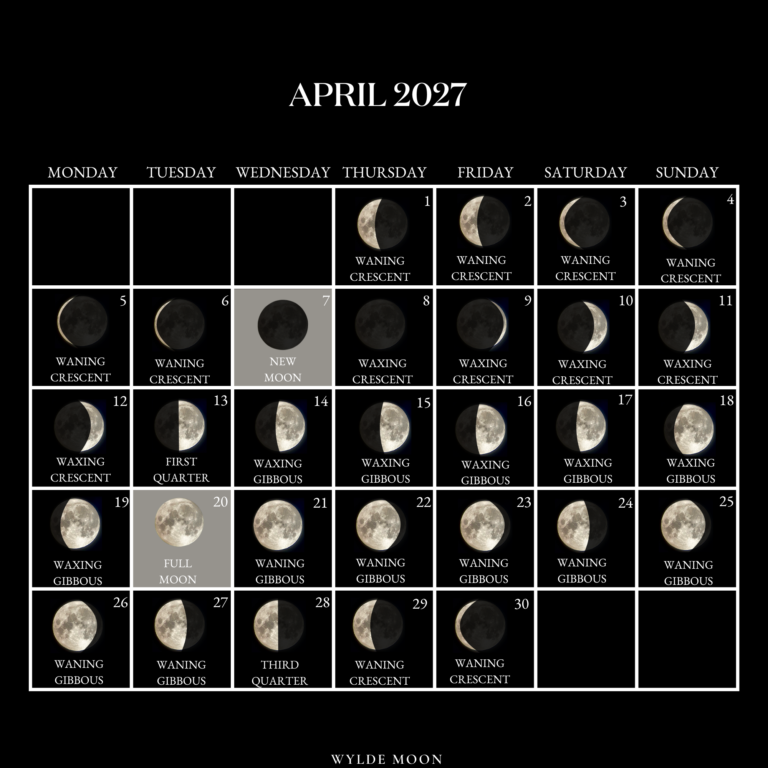
Overview of Moon Phases in January 2027
January 2027 will show clear phases of the Moon that mark important points in the month. The Moon goes through its cycle about every 29.5 days. We watch its shape change from dark to full and back again. This helps us track time and plan activities.

Using the moon phases calendar for January 2027, people can see when the New Moon, First Quarter, Full Moon, and Third Quarter happen. These phases change how much light the Moon shows at night. They also affect things like tides and night sky views.
Key Lunar Events This Month
New Moon on January 7, 2027
On January 7, 2027, the Moon is completely dark. This is the New Moon phase. It happens when the Moon sits between Earth and the Sun. The sky is darkest because no moonlight reaches us. This phase is ideal for deep sky watching.
At this time, the Moon is near the Sagittarius constellation. Sagittarius often symbolizes aiming for new goals, which fits the New Moon’s theme of new starts. The moon illumination is zero, making it invisible to the naked eye.
First Quarter on January 15, 2027
The First Quarter phase occurs on January 15, 2027. During this time, half the Moon’s face is lit. The Moon appears as a half-circle in the sky. This phase marks growing light, or the waxing moon, getting closer to full brightness.
This stage is good for beginning tasks, as energy builds up. The moonrise on this day happens in the afternoon, and the moonset occurs around midnight. If you’re wondering when the full moon will appear in December 2027, you can find detailed information by asking when exactly the full moon is expected. Moon age at this point is about 7 days since the new moon.
Full Moon on January 22, 2027
On January 22, 2027, the Full Moon lights up the night sky, and if you’re curious about when the next significant lunar event occurs, you can find detailed information on the timing and characteristics of the upcoming full moon in April 2027 that offers ideal conditions for moon gazing. This is when the Moon and Sun stand opposite each other, making the Moon fully bright. Moon illumination reaches 100%, creating perfect light for evening activities.

The Full Moon this month is sometimes called the Wolf Moon. It is an important lunar event, often symbolizing completion and fullness. Stargazers enjoy the strong moonrise and moonset times. You can find detailed phase times at Griffith Observatory’s 2027 moon phases.
Third Quarter on January 29, 2027
The Third Quarter phase comes on January 29, 2027. Here, half the Moon is lit again, but the lit part shrinks, showing the waning moon. For those interested in upcoming lunar phases, exploring how the moon will appear around the time of the new moon in December can be insightful, as detailed in the guide to the moon phases occurring in December 2027. The Moon looks like a half circle but is often shown on the opposite side to the First Quarter.
This shows the Moon is moving back toward darkness. Moon age is around 22 days, and the sky becomes less bright. The moon constellation this time is shifting into later zodiac signs.
Daily Moon Phase Progression
Waning Crescent Start of January
The month begins under a waning crescent phase, gradually leading up to the New Moon on January 7; for those interested in the lunar cycle’s progression, exploring the detailed timing and characteristics of the upcoming Full Moon in February 2027 can provide valuable insight into the Moon’s phases throughout the year, as described in this comprehensive guide to understanding the full moon’s appearance and timing in February 2027.
Waning crescent phases are calm and quiet. This is a time to prepare for new cycles. It also means moonrise is very early, sometimes near dawn, or the Moon sets well before sunrise.
Waxing Phases Leading to Full Moon
From the New Moon, the Moon moves into its waxing phases. This means the visible light grows every night. After January 7, the Moon slowly becomes a waxing crescent, then a first quarter.

By the Full Moon on January 22, the sky is bright with moonlight. These phases make good times to watch the Moon change shape, and for those looking ahead, exploring the detailed insights on the upcoming lunar cycle, including the benefits of the new moon in February, can be especially helpful for planning and growth activities aligned with the Moon’s rhythm. You can find more information about this by visiting a comprehensive guide to the new moon phase in February 2027.
Waning Phases End of January
After the Full Moon, the Moon starts to wane again. This means the light shrinks nightly. The third quarter on January 29 shows the halfway point to darkness.
As the month closes, the Moon returns to a waning crescent, lowering moon illumination. The Moon sets earlier each night and rises later, signaling the end of the lunar cycle.
Scientific Details of Moon Phases
Lunar Cycle Basics
Duration of Each Phase
The lunar cycle takes about 29.5 days to complete. Each phase lasts between 6 and 8 days. The New, First Quarter, Full, and Third Quarter phases mark the main steps in the cycle.
This cycle is steady and repeats monthly. The Moon’s visible shape changes because of how sunlight hits its surface as it orbits Earth.
Moon Age and Illumination
Moon age means how many days have passed since the last New Moon. At the start of January, the Moon age is about 26 days. Illumination is the percentage of the Moon’s visible surface lit by the Sun.

For example, the Full Moon shows 100% illumination. The New Moon has 0%. These numbers help predict how bright or dark the Moon looks.
Moon’s Position and Distance
Moon in Sagittarius Constellation
In early January 2027, the Moon moves through the Sagittarius constellation. Sagittarius is part of the zodiac and is visible in the southern sky. This position influences the Moon’s rising and setting times.
This constellation is linked with adventurous and energetic traits in astrology. For astronomers, it helps locate the Moon in the night sky using star maps.
Distance from Earth Variations
The Moon’s distance from Earth changes slightly during its orbit. The closest point is perigee, and the farthest is apogee. These shifts affect how big and bright the Moon appears.
In January 2027, this distance varies but stays close to the average of about 384,400 km. These changes cause small differences in tides and moonlight brightness.
| Date | Phase | Approximate Distance (km) |
|---|---|---|
| Jan 7 | New Moon | 367,000 (near perigee) |
| Jan 15 | First Quarter | 390,000 |
| Jan 22 | Full Moon | 405,000 (near apogee) |
| Jan 29 | Third Quarter | 380,000 |
The Moon distance influences the size of moon shadows and can affect lunar photography. The January Full Moon will look slightly smaller due to its position near apogee.
Using the January 2027 Moon Phase Calendar
How to Read the Calendar
A moon phase calendar shows what phase the Moon is on every day. Look for symbols or drawings that show the Moon’s shape. Dates for New Moon, Full Moon, and quarters are often marked clearly.
This calendar helps people plan outdoor activities and know when the sky will be darkest or brightest. It also shows moonrise and moonset times for better planning.
Importance for Night Sky Observation
Knowing the Moon phases helps astronomers and stargazers pick the best nights to view stars and planets. For example, the New Moon nights in January have the darkest skies and best views.
Careful tracking lets observers avoid full moon nights when the sky is too bright. Using detailed charts like the ones at Catalina Sky Survey’s January 2027 moon calendar helps plan the best viewing times.
| Date | Moon Phase | Illumination (%) |
|---|---|---|
| Jan 1-6 | Waning Crescent | 10% to 0% |
| Jan 7 | New Moon | 0% |
| Jan 8-14 | Waxing Crescent | 1% to 49% |
| Jan 15 | First Quarter | 50% |
This calendar section shows when the Moon is less or more visible. It helps readers know when moonlight will affect their night sky activities.
Cultural and Practical Significance
Impact on Tides and Nature
The Moon’s phases influence ocean tides, making the water rise and fall twice a day. Strongest tides, called spring tides, happen near Full and New Moons. These periods can affect fishing and coastal activities.
Many animals also act according to the lunar cycle, such as certain fish and birds. Plant growth can shift depending on moonlight and tides.
Moon Phases in Astrology and Folklore
Moon phases carry meanings in many cultures. The New Moon often means fresh starts. The Full Moon can mean fullness, power, or endings. Astrologers watch the Moon in signs like Sagittarius for guidance.
Folklore tells of wolf howls on full moons or special magic times during waning or waxing phases. These stories add cultural depth to observing the Moon.
| Phase | Symbolism | Common Folklore |
|---|---|---|
| New Moon | New beginnings | Good luck for plans |
| First Quarter | Action and decisions | Time to start projects |
| Full Moon | Completion, power | Wolves howling, magic |
| Third Quarter | Rest and release | Reflecting and letting go |
Understanding these meanings helps people connect with natural cycles and plan personal or cultural events.
Planning Activities Based on Moon Phases
Best Dates for Stargazing
The best stargazing nights in January 2027 fall either before the New Moon or just after it. The darkest skies occur around January 1-6 and after January 7.
Avoid full moon nights like January 22 for star watching since the bright Moon covers many stars with its light. Dark skies improve chances to see planets and faint objects.
You can find comprehensive monthly moon phase details and sky conditions at The Sky Live January 2027 Moon calendar.
Frequently Asked Questions
What is the Moon’s phase in January 2027?
January 2027 features four main moon phases: New Moon on January 7, First Quarter on January 15, Full Moon on January 22, and Third Quarter on January 29. The month begins with a Waning Crescent phase and ends similarly.
What is the most powerful moon phase?
Many consider the New Moon and Full Moon to be the most powerful phases. The New Moon marks new beginnings, while the Full Moon is when the Moon is fully illuminated, often seen as a time of peak energy.
What was the phase of the Moon on January 1, 2027?
On January 1, 2027, the Moon was in its Waning Crescent phase, shrinking towards the New Moon that would occur later in the month.
What are the full moon dates for 2027?
In 2027, full moons occur once each month. According to detailed calendars, January’s Full Moon is on January 22. Other months have different dates, with updates available from sources like the Griffith Observatory.

Philip Kowalski Is A Savvy Web Builder And Local Seo Aficionado Dedicated To Helping Users Navigate The Annual Chaos. With A Unique Flair For Design And Optimization, He Transforms Ideas Into Engaging Digital Experiences. Join Him On A Journey To Elevate Productivity With Expertly Crafted Printables.